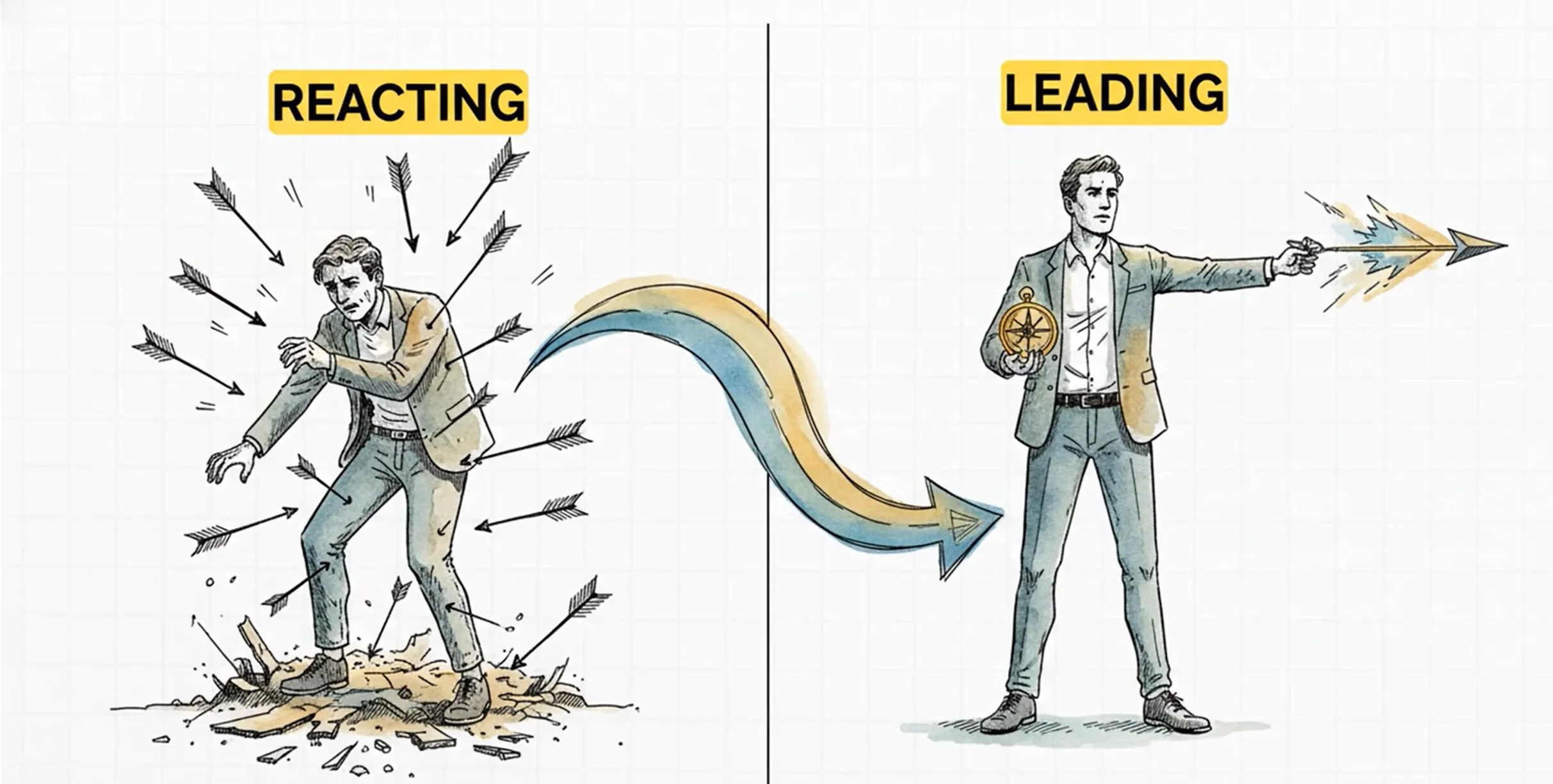
Why You Struggle to Speak English in Meetings (Even If You Know English)

Most professionals don’t actually struggle with English.
They struggle with pressure.
You can follow the conversation. You understand the discussion. You can even explain your ideas clearly — in your head.
But the moment it’s your turn to speak in a meeting… something changes.
You hesitate. You overthink. Or you stay quiet.
That’s not a language problem.
It’s a performance problem.
The Real Reasons You Struggle in Meetings
1. You Translate Instead of Thinking in English
In real time, your brain is doing too much.
You’re taking an idea in your native language → translating it → checking it → then trying to say it.
That delay kills your timing.
And in meetings, timing is everything.
By the time you’re ready, the conversation has already moved on.
2. You Don’t Have Ready-Made Language
Most professionals try to build sentences while speaking.
That’s too slow.
Confident speakers don’t build — they reuse patterns. This is exactly the kind of structured language that commands respect in meetings — phrases you can deploy without thinking.
Without those patterns, every time you speak feels like starting from zero.
3. You’re Waiting for the Perfect Moment
You think:
“Let me wait until I can say this perfectly.”
But meetings don’t work like that.
They’re fast. They’re messy. People interrupt.
If you wait for perfect — you lose your turn.
4. Speed Creates Pressure (and Pressure Kills Access)
Even if you know the words, pressure blocks access.
Under pressure, your brain doesn’t search creatively.
It defaults to what’s already trained.
If nothing is trained — you freeze. The same thing happens in high-stakes moments like video calls and impromptu questions from leadership.
The Fix: Structured Language (Not More Vocabulary)
The solution is not more words.
It’s faster access to what you already know.
And that comes from structure.
Instead of asking:
“What should I say?”
You rely on:
“What pattern do I use?”
The “Meeting Control Language” System
These are not advanced phrases.
They’re simple — but powerful.
Because they help you enter the conversation immediately.
“Let me jump in here for a second…”
“From my perspective…”
“What I’m seeing on my end is…”
“Just to add to that…”
“Can I clarify something quickly?”
These phrases do one critical thing:
They buy you time and give you control.
Once you start speaking, everything becomes easier.
Practice This Out Loud
Don’t just read these.
Say them out loud.
Better: listen and repeat using the audio feature on this page.
Drill (2 minutes)
Repeat each line 5 times:
“Let me jump in here for a second…”
“From my perspective…”
“Just to add to that…”
Then simulate a meeting response:
“From my perspective, I think we should prioritize the timeline before expanding scope.”
This is how you train speed and confidence together.
What Actually Builds Confidence
Confidence doesn’t come from knowing more English.
It comes from knowing how to start speaking under pressure.
When you have structured language ready:
- You stop hesitating
- You stop overthinking
- You start participating
And that’s what changes how people see you professionally.
Authority Insight
In my work coaching professionals across Mexico and the U.S., I’ve found that confidence in meetings is not about fluency — it’s about having structured language ready under pressure.
Final Thought
You don’t need perfect English to speak in meetings.
You need control.
And control comes from preparation — not vocabulary.
If you want to improve how you show up in English meetings, start by practicing how you enter conversations — not just what you say.