Ace Your US Company Interview from Mexico
US Interviews Are a Different Game
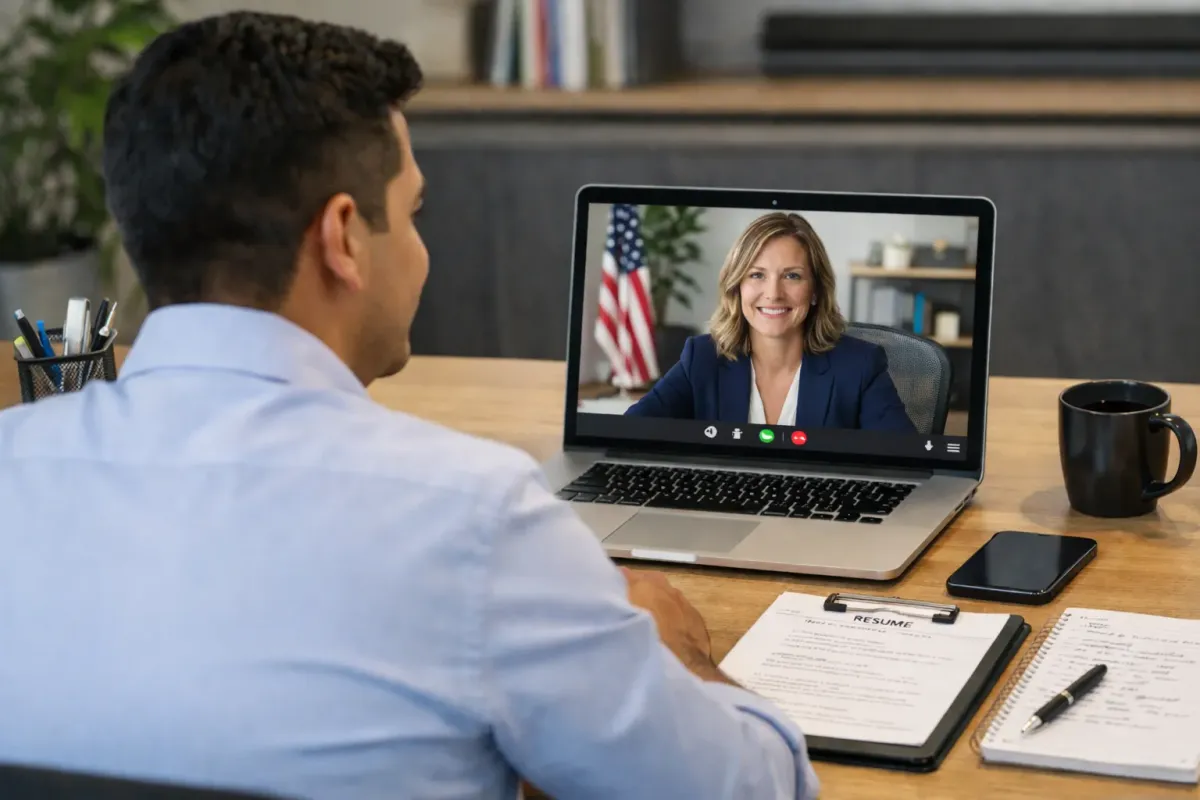
If you’ve interviewed at Mexican companies and think you know what to expect from a US employer, you’re about to get a surprise—and not the good kind.
I’ve sat on both sides of US-Mexico hiring. As an American who has lived and worked in Mexico for years, I’ve watched brilliant Mexican professionals lose out on roles they were perfectly qualified for. Not because they lacked skills. Not because their English was bad. Because they didn’t understand how US interviews actually work.
The gap isn’t language. It’s interview culture. Mexican interviews tend to be conversational, relationship-driven, and focused on credentials. US interviews—especially at tech companies, startups, and corporations with structured hiring—are behavioral, evidence-based, and ruthlessly focused on how you communicate, not just what you know.
This post walks you through the entire US interview pipeline, from “Tell me about yourself” to the follow-up email. I’ll show you what American hiring managers are actually evaluating, give you before-and-after answer comparisons, and hand you templates you can customize today.
How US Interviews Differ from Mexican Ones
Before we get into tactics, you need to understand the fundamental differences. These aren’t minor variations—they change the entire way you need to prepare.
| Mexican Interview Norms | US Interview Expectations |
|---|---|
| Conversational, relationship-building tone | Structured, evidence-based evaluation |
| Emphasis on degrees, certifications, titles | Emphasis on demonstrated impact and results |
| Indirect answers are polite and expected | Direct, specific answers are required |
| ”Tell me about yourself” = your resume summary | ”Tell me about yourself” = your value proposition |
| Salary discussed late or through HR | Salary expectations asked early, often in the first call |
| Follow-up is optional | Follow-up email within 24 hours is expected |
| Panel interviews are less common | Multiple interview rounds with different evaluators |
| Personal connections can open doors | Structured rubrics reduce relationship bias |
The biggest cultural shift: directness is not rudeness in US interviews. In Mexico, being too direct can feel confrontational. In US interviews, being too indirect reads as evasive, unprepared, or lacking confidence. This is the same dynamic that trips up professionals in everyday business communication—but in an interview, the stakes are much higher.
”Tell Me About Yourself” — The First 90 Seconds That Define Everything
This is the most common opening question in US interviews, and most Mexican professionals answer it wrong. Not because their English is weak, but because they default to a Mexican interview frame: a chronological resume walkthrough.
US hiring managers don’t want your biography. They want a value proposition—a clear, confident answer that tells them why you’re the right person for this specific role.
The Weak Answer (Common Pattern)
“Well, I studied at Tec de Monterrey where I got my degree in industrial engineering. Then I worked at a manufacturing company for three years. After that, I moved to a tech company where I’ve been working for five years. I’m very responsible and I like teamwork.”
What the interviewer hears: A list of facts I can already see on your resume. No insight into what you actually bring to this role.
The Strong Answer
“I’m an operations manager with eight years of experience optimizing supply chains for manufacturing and tech companies in Mexico. My specialty is reducing lead times without increasing cost—at my current company, I cut our fulfillment cycle from 14 days to 6, which saved $2.3 million annually. I’m excited about this role because you’re scaling your Mexico operations, and I’ve done exactly that: built and led cross-border teams that hit US quality standards while working within Latin American supply networks.”
What the interviewer hears: A professional who knows their value, can quantify their impact, and has already connected their experience to our needs.
The Formula
Present (what you do now + your specialty) → Past (your most impressive result with numbers) → Future (why this role is the logical next step).
Practice this answer until it takes 60-90 seconds. Time yourself. If it runs longer than two minutes, cut it.
Behavioral Questions: The STAR Method Is Non-Negotiable
Here’s the single biggest gap between Mexican and US interview prep: behavioral questions.
In Mexico, interviews lean heavily on “What would you do if…?” hypothetical questions. US interviews ask “Tell me about a time when…” questions—and they expect a specific, real story from your past. Not a hypothetical. Not a generalization. A concrete example with details and results.
The framework you need is STAR: Situation, Task, Action, Result.
How STAR Works
- Situation: Set the scene. Where were you? What was happening?
- Task: What was your specific responsibility or challenge?
- Action: What did you do? (Not “we”—they want to know your contribution.)
- Result: What was the measurable outcome?
Before and After: A Behavioral Answer
Question: “Tell me about a time you had to manage a difficult stakeholder.”
Weak answer (no structure):
“In my last job, I had a difficult client who was always changing requirements. I tried to communicate better and eventually we resolved the issues. It was a good learning experience.”
Strong answer (STAR method):
“Situation: At my previous company, I managed the implementation of an ERP system for a client in Monterrey. The CFO kept changing requirements mid-sprint, which was derailing our timeline and frustrating the development team.
Task: I needed to protect the project timeline while maintaining the client relationship—the account was worth $400K annually.
Action: I scheduled a one-on-one with the CFO and brought data: I showed him that each mid-sprint change was adding 8-12 days to the timeline and $15K in rework costs. I proposed a change request process where new requirements would be evaluated and prioritized at the start of each sprint, rather than injected mid-cycle. I also created a shared requirements backlog that gave him visibility into everything planned, so he could see his requests were being captured even when they weren’t implemented immediately.
Result: Mid-sprint changes dropped by 85%. We delivered the project two weeks ahead of the revised timeline. The CFO actually became one of our strongest references—he told our sales team that the structured process made him more confident in the final product.”
Notice what makes the strong answer work: specific details, numbers, and a clear narrative arc. The interviewer can picture the situation, evaluate your judgment, and verify the result.
Common US Interview Questions with Phrase Starters
Here are the questions you’re most likely to face, with opening phrases that set up strong answers. Prepare a STAR story for each one.
| Question | Strong Opening Phrase |
|---|---|
| ”Tell me about yourself." | "I’m a [role] with [X years] of experience in [specialty]. My focus is…" |
| "Why do you want to work here?" | "What drew me to this role specifically is…" |
| "Tell me about a time you failed." | "One situation that taught me a lot was when…" |
| "How do you handle conflict?" | "I had a situation where two stakeholders disagreed on [X]. Here’s how I approached it…" |
| "What’s your greatest strength?" | "The feedback I consistently get from managers and colleagues is…" |
| "Where do you see yourself in 5 years?" | "My goal is to [specific growth area]. This role is a strong fit because…" |
| "Why are you leaving your current role?" | "I’ve accomplished [X] in my current position, and I’m looking for…" |
| "Tell me about a time you led a project." | "I led a [type] project with [scope]. The biggest challenge was…" |
| "How do you prioritize competing deadlines?" | "A recent example: I had [X] and [Y] due the same week. I evaluated them by…" |
| "Do you have any questions for us?" | "Yes—I’d love to understand [something specific about the team/role/strategy].” |
Critical tip: For “Do you have any questions?”, always have 2-3 prepared. Asking nothing signals disinterest. Ask about the team, the biggest challenge the role faces, or what success looks like in the first 90 days. Never ask about vacation days or benefits in an early-round interview.
How to Discuss Salary in USD
This is where Mexican professionals most frequently stumble—not because they don’t know their worth, but because the cultural norms around salary discussion are completely different.
In Mexico, salary negotiation often happens late in the process, sometimes through HR intermediaries, and there’s a cultural tendency to accept what’s offered. In the US, you’ll be asked about salary expectations early—often in the first recruiter call. And the expectation is that you’ll give a clear, confident number.
The Wrong Approach
Interviewer: “What are your salary expectations?”
Candidate: “I’m flexible. Whatever you think is fair.”
This isn’t modesty—it’s a red flag. US hiring managers interpret this as either (a) you haven’t researched the market, (b) you don’t value your own skills, or (c) you’re trying to avoid negotiation, which makes them wonder what else you’ll avoid.
The Right Approach
“Based on my research and the scope of this role, I’m targeting a range of $85,000 to $95,000 USD annually. That’s aligned with market data for this level of experience in [industry/location]. I’m open to discussing the full compensation package—salary, equity, benefits—to find something that works for both of us.”
How to Research Your Number
- Glassdoor, Levels.fyi, Payscale — search the company and role for US salary data
- LinkedIn job postings — many US states now require salary ranges in job posts
- Recruiter conversations — ask “What’s the budgeted range for this role?” before you give your number
- Cost-of-living adjustment — if the role is remote from Mexico, some companies adjust. Ask about their compensation philosophy for remote international employees.
If they push you for a number before you’re ready:
“I’d like to understand the full scope of the role before committing to a specific number. Can you share the budgeted range for this position?”
This is direct, professional, and common in US interviews. It’s not rude—it’s how high-stakes communication works.
Remote and Video Interview Tips
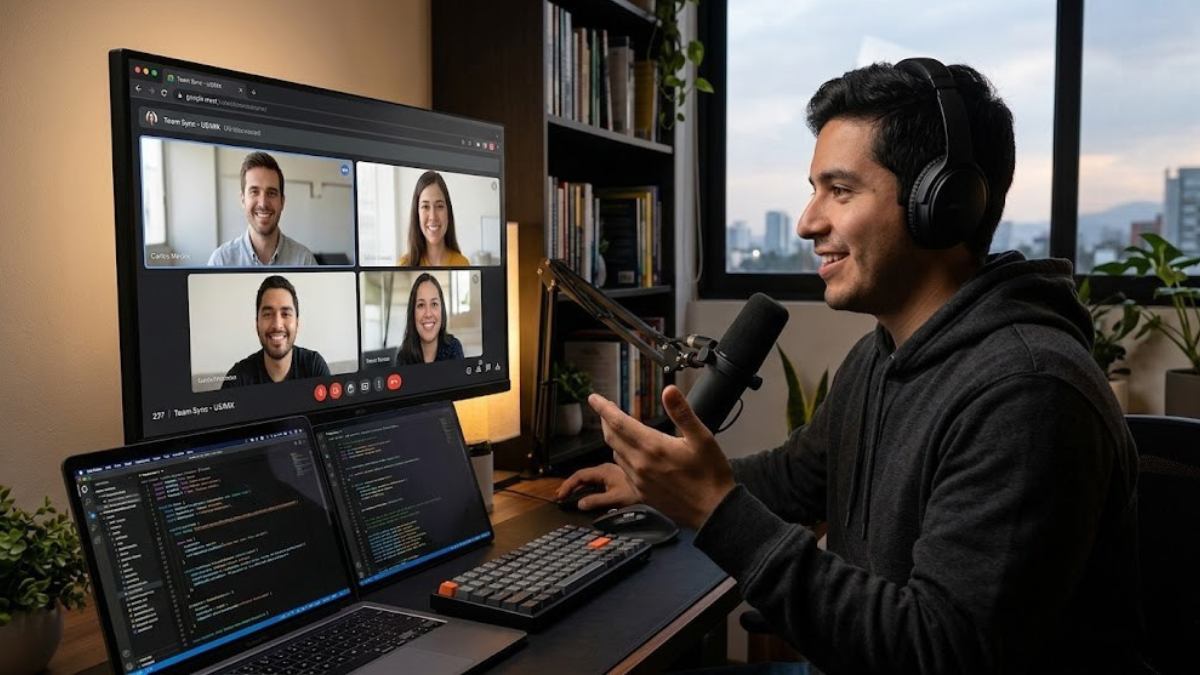
Most US-Mexico interviews happen over Zoom, Teams, or Google Meet. The format adds a layer of complexity that many candidates underestimate.
Technical Setup (Non-Negotiable)
- Internet: Test your connection speed before the interview. Minimum 10 Mbps upload. Have a mobile hotspot as backup.
- Camera: Position at eye level. Looking down into a laptop camera reads as disengaged.
- Lighting: Face a window or use a ring light. Avoid backlighting—if the interviewer can’t see your face clearly, you lose 50% of your nonverbal communication.
- Background: Clean, uncluttered. A bookshelf or plain wall works. Avoid virtual backgrounds—they glitch, and the glitching is distracting.
- Audio: Use a headset with a microphone. Laptop mics pick up echo and background noise.
Communication Adjustments for Video
On video, you lose the natural back-and-forth of in-person conversation. Compensate:
- Pause before answering. A 2-second pause on video reads as thoughtful. Jumping in immediately can create audio overlap.
- Signal when you’re done. End answers with a clear closing: “That’s the main takeaway from that experience” or “Would you like me to go deeper on any part of that?”
- Don’t read notes on screen. It’s obvious—your eyes drift, and it looks like you’re reading from a script. Have bullet points on a notepad beside your screen if needed.
- Nod visibly. On video, subtle nods don’t register. Exaggerate slightly so the interviewer knows you’re tracking.
Handling the Dreaded Lag
If there’s audio delay, say:
“It seems like we have a slight delay on the connection. I’ll make sure to pause after my answers to give you space to respond.”
Naming the problem removes the awkwardness. This is the same executive presence skill that makes senior leaders effective on video calls.
Cultural Differences: Mexican Indirectness vs. American Directness
This is the underlying pattern behind most interview mistakes Mexican professionals make. It’s not about language—it’s about communication culture.
The Indirectness Problem
Mexican professional culture values courtesy, relationship-building, and hedging. These are genuine strengths in many contexts. But in a US interview, they backfire:
| Mexican Communication Habit | How It Reads in a US Interview |
|---|---|
| ”I think maybe I could possibly contribute…” | Lacks confidence |
| Long preambles before the main point | Evasive, unfocused |
| Deflecting credit to the team | Can’t identify personal contribution |
| Avoiding discussion of failures | Defensive, lacks self-awareness |
| Saying “yes” to avoid disagreement | People-pleaser, not a critical thinker |
What Directness Looks Like
Directness in a US interview doesn’t mean being blunt or arrogant. It means:
- Leading with the answer, then explaining. Not the other way around.
- Using “I” when describing your contributions. “I led,” “I decided,” “I built”—not “we did.”
- Quantifying results. “$2M in savings,” “reduced cycle time by 40%,” “managed a team of 12.”
- Admitting failures directly, then pivoting to the lesson. “I made the wrong call on the vendor. Here’s what I learned and what I did differently next time.”
The “I vs. We” Problem
This trips up Mexican professionals more than anything. In Mexican culture, claiming individual credit can feel presumptuous—presumido. In a US interview, using “we” for everything makes the interviewer wonder what you specifically did.
The fix: Use “I” for your decisions and actions, and “we” for the team context.
“I was part of a 6-person team. My specific role was designing the database architecture and leading the migration. I chose PostgreSQL over MySQL because of our complex query requirements, and I wrote the migration scripts that moved 4 million records with zero downtime. The team delivered the project two weeks early.”
You’ve acknowledged the team. You’ve also made crystal clear what you brought to the table.
The Follow-Up Email: Your Secret Weapon
Most Mexican professionals don’t send follow-up emails after US interviews. In the US, not sending one is a negative signal. Hiring managers notice.
Send your follow-up within 24 hours—ideally the same day. Here’s a template:
Follow-Up Email Template
Subject: Thank you — [Role Title] interview
Hi [Interviewer’s Name],
Thank you for taking the time to speak with me today about the [Role Title] position. I enjoyed learning about [specific thing they mentioned—the team restructuring, the product roadmap, the expansion into Latin America].
Our conversation reinforced my excitement about this role. In particular, I was glad we discussed [specific topic from the interview], because it aligns directly with my experience [brief reference to something you discussed].
I’m confident I can contribute to [specific team goal or challenge they mentioned], and I’d welcome the opportunity to take the next step.
Please don’t hesitate to reach out if you need any additional information from me.
Best regards, [Your Name]
Why This Works
- Specific references prove you were listening (not sending a generic template)
- “Reinforced my excitement” is stronger than “I’m interested”
- Connecting your experience to their needs reminds them of your fit
- “Please don’t hesitate” is a US professional convention—it invites continued communication without being pushy
What NOT to Do
- Don’t send a follow-up that says “Thank you for the interview. I hope to hear from you soon.” That’s empty.
- Don’t send it more than 24 hours later. Same-day is ideal.
- Don’t follow up multiple times if you don’t hear back. One email. Wait the timeline they gave you. Then one polite check-in.
Your Interview Prep Checklist
Before any US company interview, run through this list:
-
Research the company — Read their latest blog posts, press releases, and Glassdoor reviews. Know their product, their competitors, and their recent news.
-
Prepare 5-7 STAR stories — Cover leadership, conflict, failure, teamwork, initiative, and a technical challenge. These stories will answer 90% of behavioral questions.
-
Practice “Tell me about yourself” — Time it. 60-90 seconds. Present → Past → Future. No resume recitation.
-
Know your salary number — Research the market rate. Have a range ready. Practice saying it out loud without hedging.
-
Test your tech setup — Camera, mic, lighting, internet. Do a test call with a friend 24 hours before.
-
Prepare 3 questions to ask them — About the team, the role’s biggest challenge, or success metrics. Never “no questions.”
-
Draft your follow-up email template — Have the structure ready so you only need to fill in specifics after the interview.
-
Take the Speaking Confidence Quiz — Identify which communication patterns need the most work before your interview.
Keep Reading
- 10 Business English Mistakes Mexican Professionals Make — The language interference patterns that undermine your credibility in professional settings.
- How to Negotiate in English: A Proven 5-Step Framework — When the salary conversation turns into a negotiation, these phrases keep you in control.
- Executive Presence on Video Calls: 7 Trust-Building Habits — Project authority and clarity in every virtual interview.
Your Interview Is a Communication Test. Pass It.
Here’s the uncomfortable truth: the candidate who gets the offer isn’t always the most qualified. It’s the candidate who communicates their qualifications most effectively. In a US interview conducted in English, that communication test is happening on two levels simultaneously—your professional expertise and your English delivery.
The good news is that both are trainable. The STAR method is a framework, not a talent. Directness is a skill, not a personality trait. And salary negotiation is a conversation pattern you can practice until it feels natural.
If you have a US company interview coming up and you want to walk in prepared—not just with answers, but with the communication skills that make those answers land—book a free strategy session and let’s build your interview game plan together.
You’ve earned the interview. Now earn the offer.
Robert Cushman is an English communication coach based in Mexico who specializes in preparing Latin American professionals for high-stakes moments at US companies. He has sat on both sides of US-Mexico hiring and understands the cultural gaps that cost qualified candidates the roles they deserve.