The Nearshoring English Gap: How Miscommunication Costs Global Teams $1.2 Trillion a Year

Your nearshoring team passed every technical interview. Their architecture is solid. Their code is clean. Their time zone overlap is perfect.
And you’re still losing money.
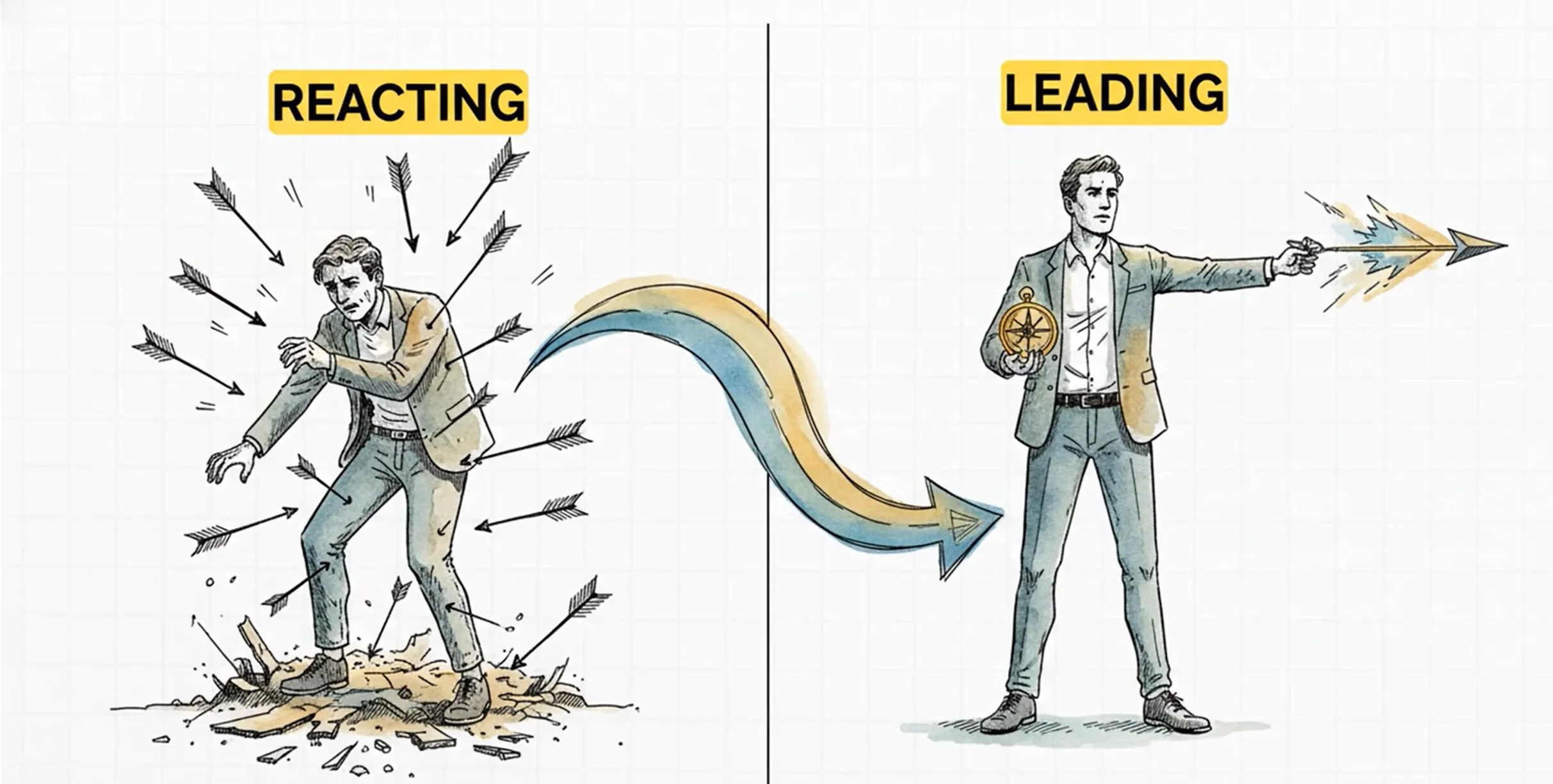
Not because of skill gaps. Not because of infrastructure. Because of how your team communicates — or fails to.
According to Grammarly’s 2024 State of Business Communication Report, ineffective communication creates a $1.2 trillion productivity gap globally. That’s not a typo. Trillion, with a T.
For large companies, the annual cost is an estimated $62.4 million — drained through rework, delayed launches, failed handoffs, and lost deals. Mid-market firms lose between $420,000 and $1.35 million per year. And in global teams specifically, language barriers and miscommunication cut overall productivity by 20% to 25%.
This article isn’t about culture (we wrote a complete guide to US-Mexico cultural differences for that). This is about money — what the communication gap costs, where the losses hide, and what the ROI looks like when you close it.
The Three Layers of Loss
Miscommunication costs don’t show up on a single line item. They’re distributed across the organization in three layers, each progressively harder to measure — and more expensive.
Layer 1: Visible Costs (The Ones You Can Count)
These are the losses that show up in project tracking tools, sprint reports, and quarterly reviews:
| Cost Category | What Happens | Estimated Impact |
|---|---|---|
| Rework | Requirements misunderstood → code built to wrong spec → rebuilt | 25-40% of engineering time on global teams |
| Delayed launches | Ambiguous handoffs → blocked sprints → missed release dates | Average 2-4 week delay per miscommunication cycle |
| Failed deals | Proposals misinterpreted, negotiations derailed by cultural gaps | Revenue loss varies; one lost enterprise deal can exceed annual communication training costs |
| Attrition | Talented developers leave teams where they feel unheard or disrespected | Replacement cost: 50-200% of annual salary per engineer |
A nearshore developer who costs 40-60% less than a US-based hire stops being a savings if 25% of their output gets reworked due to miscommunication.
Layer 2: Hidden Costs (The Ones You Feel But Can’t Measure)
These don’t appear in any dashboard:
-
The “hidden blocker” pattern: A developer encounters a technical blocker but doesn’t raise it in the daily standup because admitting problems feels like a public admission of failure in a collectivist, high-power-distance culture. The blocker compounds silently for days until the sprint goal is missed.
-
The filtered status update: A team lead reports “we’re making progress” when the actual status is “we’re behind and need help.” The American manager takes the report at face value. By the time the real situation surfaces, the project is weeks behind.
-
The agreement that isn’t one: A stakeholder says “yes” in a meeting — meaning “I heard you and I respect your position” — and the PM records it as a binding commitment. When the deliverable doesn’t materialize, both sides feel betrayed.
-
The Slack friction tax: Terse, unadorned messages (“What’s the status on the API endpoint?”) land as aggressive to team members from high-context cultures. Over time, this erodes psychological safety, reduces voluntary information sharing, and increases response latency.
Layer 3: Opportunity Costs (The Ones You Never See)
The most expensive layer is the one you can’t measure at all — the value you never captured:
- Ideas never shared because a developer didn’t have the English confidence to propose them in a meeting
- Innovations never surfaced because retrospectives didn’t feel safe for honest feedback
- Cross-functional collaboration that never happened because the cultural bridge was never built
- Senior talent that never got promoted because their communication didn’t match their technical ability
- Clients never won because the pitch didn’t land with the precision the solution deserved
Mexico’s English Proficiency: The Data
The communication gap isn’t abstract. The EF English Proficiency Index quantifies it:
- Global rank: Mexico places 87th out of 116 countries in the 2024-2025 EF EPI — classified as “Very Low” proficiency
- Declining trajectory: Mexico’s score has dropped 69 points since 2011, placing it 20th out of 21 Latin American countries
- The tech hub exception: Nearshoring hubs like Nuevo León (Monterrey) and Jalisco (Guadalajara) score significantly higher, landing in the “Moderate” proficiency band
- Industry variation matters most: Professionals in Strategy & Project Management score 627 (“Very High”), while Accounting/Finance scores 489 and Maintenance scores 458
What This Means for Your Team
The gap isn’t uniform. It follows a predictable pattern:
Senior technical leads and architects — usually strong English skills. They passed English-language interviews and work daily with US counterparts.
Mid-level developers and engineers — mixed. Technical vocabulary is strong; business communication, meeting participation, and persuasive writing are where gaps emerge.
QA, support, operations, and administrative roles — most exposed. These roles often have the highest communication volume with US stakeholders and the lowest English proficiency investment.
Middle management — the critical blind spot. Managers who bridge the operational and strategic layers need both technical English AND the cultural communication skills to translate between Mexican and American work styles. This is where miscommunication is most expensive, because a misunderstood directive cascades to every report.
The Nearshoring Advantage — When Communication Works
The business case for Mexico as a nearshoring destination is overwhelming — when the communication layer is functioning:
Time Zone ROI
| Comparison | Time Zone Gap | Impact |
|---|---|---|
| US ↔ Mexico (LATAM) | 0-3 hours | Real-time Agile collaboration |
| US ↔ Eastern Europe | 6-8 hours | Async handoffs, delayed feedback cycles |
| US ↔ Asia | 12-14 hours | Full-day communication lag |
Teams with at least 6 hours of workday overlap complete projects 23% faster on average. Similar time zones reduce project delays by up to 30%.
Mexico’s 0-3 hour gap means you get same-day code reviews, real-time standup participation, and immediate blocker resolution — advantages that Eastern European and Asian teams simply can’t match.
Velocity and Performance
When nearshore teams are integrated with culturally-adapted processes, the results are dramatic:
- 15% velocity increase within just two sprints of proper integration
- 15-25% faster project turnaround compared to offshore (Asia-based) counterparts
- 38% improvement in ticket resolution times — documented in a logistics technology case study after shifting to a Mexican nearshore team
- 52% improvement in average resolution time — documented in a financial services case study
Cost Structure
- 40-60% labor cost savings compared to US-based hires
- 35% total landed-cost advantage over China (factoring in logistics, IP protection, and communication overhead)
- $43.9 billion in FDI flowed into Mexico in 2023 — a record, driven by nearshoring demand
The math is clear: Mexico offers the cost advantage of offshore with the collaboration speed of onshore. But only if the communication layer works.
The ROI of Closing the Gap
Here’s the financial case for investing in English communication for your nearshore team.
The Cost of Doing Nothing
Take a 20-person nearshore engineering team at an average fully-loaded cost of $45,000/year per developer ($900,000 total annual cost):
| Loss Category | Conservative Estimate | Annual Cost |
|---|---|---|
| Rework from miscommunication (25% of output) | 25% × $900K | $225,000 |
| Sprint delays (1 week per quarter) | 4 weeks × team cost | $69,000 |
| Attrition from cultural friction (2 devs/year) | 2 × $45K replacement | $90,000 |
| Hidden blocker compound effect | ~10% schedule overrun | $90,000 |
| Total estimated annual loss | $474,000 |
On a $900K team, you’re losing over 50% of your cost savings to communication friction.
The Cost of Fixing It
Targeted English communication training for a 20-person team — focused on the specific patterns that cause business impact (meeting participation, blocker escalation, status reporting, persuasive writing) — typically costs $15,000-$40,000 annually.
If that investment recovers even half of the $474K in losses, the ROI is 500-1,500%.
This isn’t general “English class.” This is targeted coaching on the specific communication patterns that cost money:
- How to escalate a blocker without losing face
- How to deliver a status update that an American PM can action
- How to say “no” or “not yet” in a way that maintains both honesty and respect
- How to participate assertively in meetings without violating cultural norms
- How to write Slack messages and emails that land correctly across cultures
What Separates Teams That Capture the ROI
After working with professionals across tech, logistics, finance, and operations, the teams that close the nearshoring communication gap share three patterns:
1. They Invest in Communication, Not Just Language
General English training (grammar drills, vocabulary lists, TOEFL prep) doesn’t move the needle for working professionals. What moves the needle is context-specific communication coaching — training on the exact scenarios, phrases, and cultural dynamics that create friction in their daily work.
2. They Train the Middle, Not Just the Top
Executive leaders usually have strong English. Junior developers communicate primarily through code. It’s the middle layer — team leads, project managers, QA leads, and senior developers who run standups, write status reports, and interface with US stakeholders — where communication training has the highest ROI.
3. They Build Cultural Bridges, Not Just Language Skills
The Hofstede dimensions (Power Distance 81 vs. 40, Individualism 91 vs. 30) aren’t trivia. They’re operational realities that determine whether a developer flags a blocker or hides it, whether a “yes” means commitment or acknowledgment, whether feedback lands as coaching or as public shaming.
Teams that train for cultural communication — not just language proficiency — see the compound effect: better information flow, faster escalation, higher psychological safety, and ultimately, faster delivery.
The Bottom Line
Mexico is the premier nearshoring destination for North American companies. The time zone overlap, cost structure, and talent pipeline are unmatched. But the $1.2 trillion global communication gap doesn’t exempt your team just because your developers write clean code.
The English gap in Mexico isn’t uniform (EF EPI 87th globally, but “Moderate” to “Very High” in tech hubs and strategic roles). The cultural communication gap is more subtle and more expensive — hiding in filtered status updates, silent blockers, and agreements that aren’t agreements.
The companies that capture the full ROI of nearshoring don’t treat communication as a soft skill. They treat it as infrastructure — as critical as CI/CD pipelines, monitoring, and incident response.
The ones that don’t? They’re paying nearshore rates and getting offshore results.
Your Next Step
If you’re managing a US-Mexico team and seeing the patterns described in this article — rework cycles, silent blockers, “yes” that doesn’t mean yes, Slack friction — the gap is costing you more than you think.
Book a free strategy session to assess the specific communication gaps in your team and build a targeted training plan that pays for itself in the first quarter.
Sources: Grammarly 2024 State of Business Communication Report, EF English Proficiency Index 2024-2025, Hofstede Insights Cultural Dimensions, UNCTAD FDI Data 2023, CodersLink Tech Management Insights.