How One Company Transformed Their C-Suite's English in 12 Months
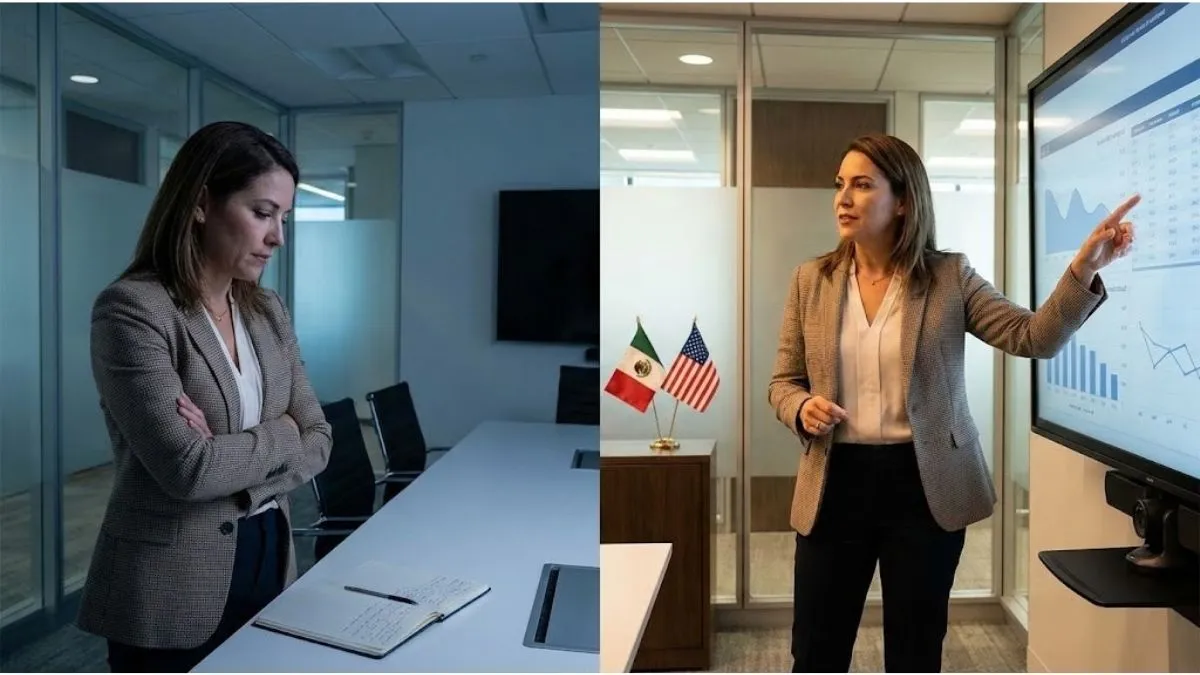
When the COO of a leading Mexican direct sales company reached out about English coaching, she didn’t ask about grammar drills or vocabulary lists.
She asked: “Can you help my leadership team command a room when the room is full of Americans?”
Twelve months later, that question had been answered—but the transformation went far deeper than anyone expected.
The Company: A Mexican Success Story Expanding North
This cosmetics and beauty company, founded in 2008, had grown to over 500 employees with distribution centers across Mexico. Their mission centered on empowering women through entrepreneurship—a model that had created thousands of independent consultants and built a brand trusted by Mexican families.
But growth had created a new challenge.
Their US market expansion required executives to lead calls with American partners, negotiate supplier contracts in English, and present to English-speaking board members. The leadership team had the business acumen. They had the industry expertise. What they lacked was the confidence to deploy that expertise in their second language.
The Leadership Team: Six Executives, Six Different Challenges
Over 12 months, I worked with six senior leaders across the organization:
The Mexico-Based COO — Brilliant at operations, but avoided English-language calls whenever possible. Would defer to colleagues or reschedule meetings rather than lead them herself.
The US-Based COO — Native English speaker managing cross-border operations. Needed her Mexican counterparts to engage directly with US teams instead of routing everything through her.
The General Manager — Reports directly to the board. Executive-level presentations in English felt like walking a tightrope without a net.
The Commercial Director — Responsible for sales and marketing across both countries. Could discuss strategy in Spanish for hours, but switched to monosyllables in English client meetings.
The HR Director — Recruiting senior managers in both regions. Phone screens and interviews in English were consistently shorter and less substantive than their Spanish equivalents.
The CFO/General Counsel — An attorney handling tax audits, supplier negotiations, and financial leadership. Her English conversations weren’t just important—they were legally binding.
Each executive faced a different version of the same problem: their English was functional, but it wasn’t commanding. In executive-level moments, they felt their authority diminish the moment they switched languages.
The Approach: Beyond Language Training
Traditional corporate English programs follow a predictable pattern: assess current level, assign coursework, track grammar improvement, repeat. The results are equally predictable—modest gains that plateau quickly.
We took a different approach.
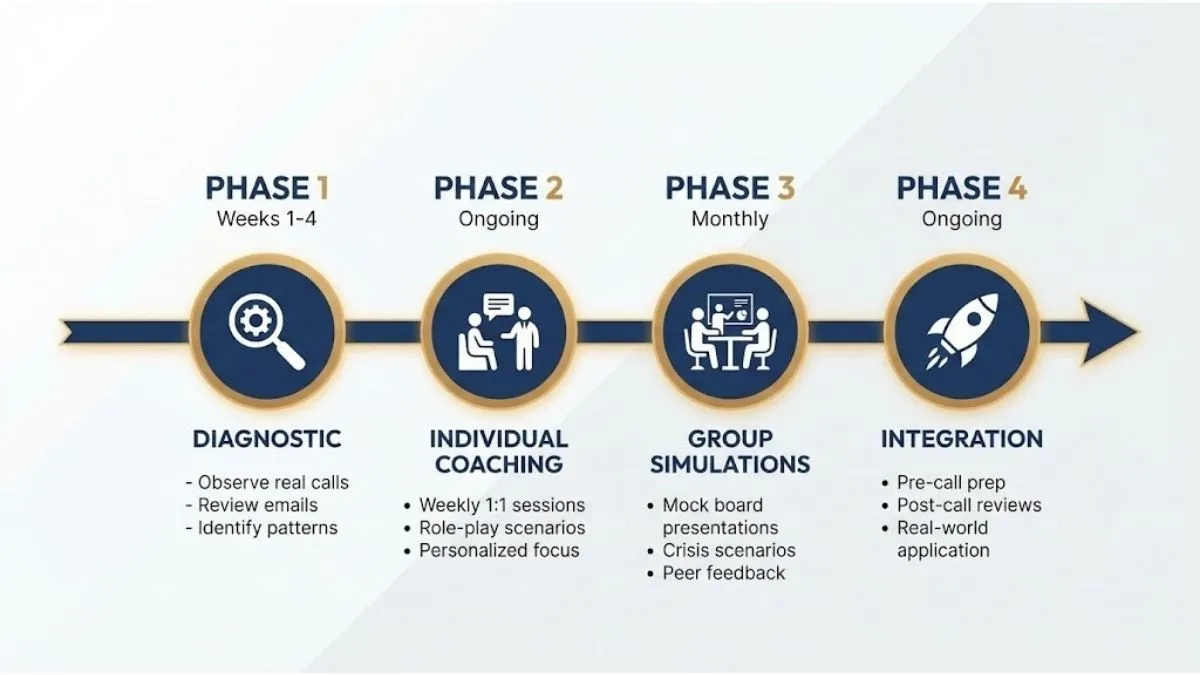
Phase 1: Diagnostic (Weeks 1-4)
Before any coaching began, I needed to understand not just their English level, but their actual communication challenges. This meant:
- Observing real client calls and internal meetings
- Reviewing email threads and presentation decks
- Understanding the specific situations where confidence collapsed
- Identifying patterns across the leadership team
What emerged was surprising. Grammar wasn’t the primary issue. The real barriers were:
- Fear of real-time judgment — Executives who could write sophisticated English emails would freeze when asked to speak extemporaneously
- Cultural code-switching gaps — They understood American English, but not American business communication norms
- Missing frameworks — They lacked structured approaches to objection handling, negotiation, and executive presence
- Isolation — Each leader thought they were the only one struggling
Phase 2: Individual Coaching (Ongoing)
Each executive received weekly one-on-one sessions tailored to their specific challenges:
For the Mexico-Based COO, we focused on impromptu speaking. She needed to respond confidently when American executives asked unexpected questions. We practiced rapid-fire Q&A until her brain stopped translating and started thinking in English.
For the General Manager, we rehearsed board presentations repeatedly. Not reading scripts—performing them. We worked on pacing, emphasis, and the body language signals that project authority regardless of accent.
For the Commercial Director, we role-played client scenarios. Price objections, scope negotiations, competitive positioning. By the fifth month, he could defend a margin in English as naturally as in Spanish.
For the HR Director, we developed interview frameworks. Not just questions to ask, but how to probe, how to build rapport, and how to assess candidates when both parties were working in their second language.
For the CFO, we tackled executive-level negotiations. Supplier contracts, audit responses, financial presentations. We practiced the specific language of legal and financial authority—phrases that brook no ambiguity.
Phase 3: Group Simulations (Monthly)
Individual coaching addresses personal gaps. But executives don’t operate in isolation.
Once a month, we brought the leadership team together for group simulations. These sessions recreated the exact pressure of real business situations:
- Mock board presentations with the team playing skeptical board members
- Cross-functional negotiations where team members took opposing sides
- Crisis communication scenarios requiring real-time collaboration
- Client call simulations with unexpected objections and challenges
The format was deliberately uncomfortable. Multiple observers. Time pressure. Challenging questions. The point wasn’t to succeed—it was to practice recovering from failure in a safe environment.
What happened in these sessions was unexpected: the team began coaching each other. The Commercial Director noticed patterns in the COO’s presentations that I had missed. The CFO offered negotiation tactics that elevated everyone’s approach. The learning became collaborative.
Phase 4: Integration (Ongoing)
The final phase focused on applying skills to real situations. This meant:
- Pre-call preparation — Brief sessions before important meetings to rehearse key points
- Post-call reviews — What worked? What didn’t? What would you do differently?
- Ongoing refinement — Adjusting techniques based on real-world feedback
Beyond English: The Unexpected Curriculum
What surprised both me and the client was how much of our work extended beyond English.
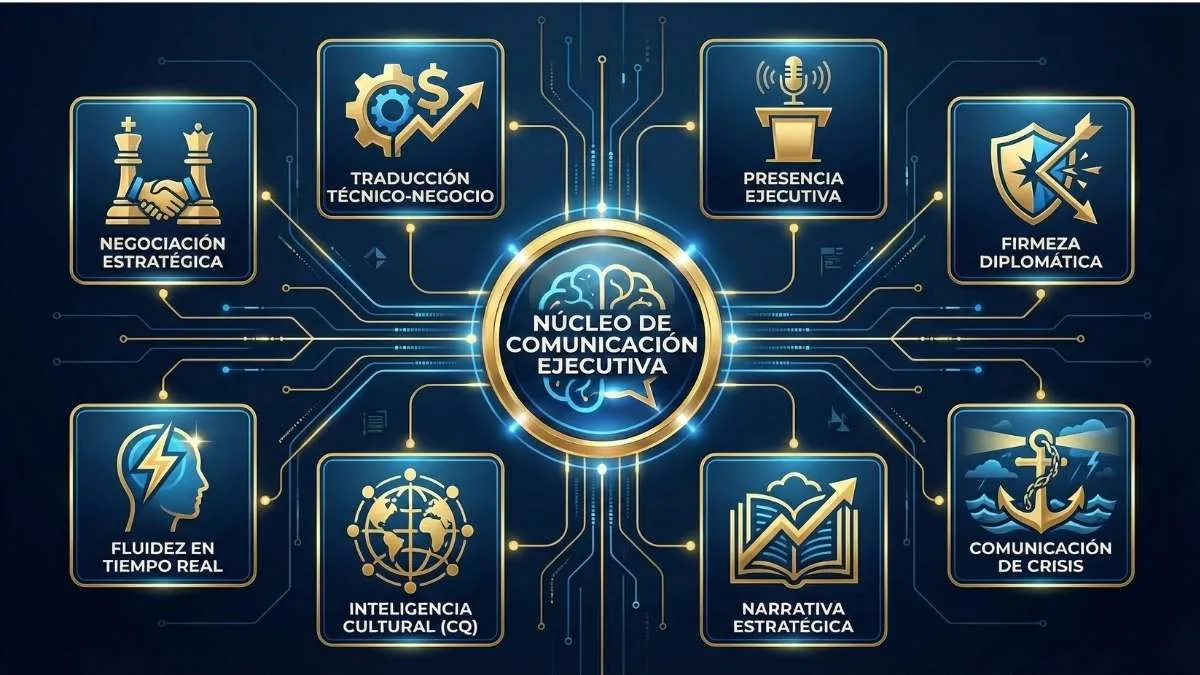
When you help someone communicate more effectively in their second language, you inevitably address how they communicate, period. The frameworks we developed applied equally in Spanish:
Executive Presence — The body language, vocal patterns, and strategic pauses that project authority aren’t language-specific. Several participants reported that their Spanish presentations improved as a direct result of our English work.
Objection Handling — The frameworks for acknowledging pushback, reframing concerns, and guiding conversations toward agreement work in any language. The CFO used the same negotiation structure we developed for US suppliers in a major Mexican contract negotiation.
Storytelling — Business communication depends on narrative. We worked on structuring information for impact, using concrete examples, and creating memorable through-lines. These skills transferred immediately to internal communication in Spanish.
Emotional Intelligence — Reading a room, adjusting your approach in real-time, and recovering from missteps are universal leadership competencies. Practicing them in a second language—where everything requires more conscious effort—accelerated development.
Public Speaking — Several participants had public speaking anxiety that predated any English challenges. Working in English gave us permission to address it directly without triggering defensiveness about their Spanish communication.
The Results: What Changed
After 12 months of intensive work, the transformation was measurable:
Behavioral Changes:
-
The Mexico-Based COO now leads English-language calls without hesitation. She reported that a recent board presentation in English felt “almost normal”—a phrase that would have been unimaginable twelve months prior.
-
The General Manager volunteered to present at an international industry conference—something he had previously avoided for years.
-
The Commercial Director closed the company’s largest US partnership deal, leading negotiations that previously would have been handled by the US-based COO.
-
The HR Director’s English-language interviews now run the same length as her Spanish ones. She reported identifying candidates she would have previously dismissed due to language barriers on her side.
-
The CFO successfully led a tax audit discussion with US authorities, a situation that had previously required external counsel for communication support.
Organizational Impact:
-
Cross-border communication no longer routes through a single bilingual executive. The bottleneck is eliminated.
-
The US-based COO can focus on strategic priorities instead of serving as a translation layer for every important conversation.
-
Meeting efficiency improved. When executives can express nuance directly, decisions happen faster.
-
Internal mentoring on English communication has become organic. Senior leaders now coach junior managers on the same techniques.
Confidence Metrics:
I asked each participant to rate their confidence in English business communication on a 1-10 scale at the start and end of the engagement:
| Executive | Before | After | Change |
|---|---|---|---|
| COO (Mexico) | 4 | 8 | +4 |
| General Manager | 5 | 8 | +3 |
| Commercial Director | 4 | 7 | +3 |
| HR Director | 5 | 8 | +3 |
| CFO | 5 | 8 | +3 |
Self-reported metrics should always be viewed with appropriate skepticism. But the behavioral evidence supports these numbers. These executives are doing things they wouldn’t have attempted a year ago.
What Made This Work: Key Success Factors
Reflecting on this engagement, several factors enabled the results:
1. Executive Commitment
The COO who initiated this program participated fully. When the top leader visibly commits to improvement—including being vulnerable about their own gaps—it creates permission for everyone else.
2. Sustained Duration
Twelve months allowed for real behavior change. Short-term programs might improve test scores, but they rarely shift deep-seated communication patterns. The extended timeline meant we could iterate, adjust, and reinforce until new behaviors became automatic.
3. Real Situations Over Simulations
We worked with actual client decks, real negotiation scenarios, and upcoming presentations. The content was immediately applicable, which increased both engagement and retention.
4. Peer Learning
Group sessions created accountability and accelerated learning. Participants learned from watching each other succeed and fail. The emotional support of shared struggle made individual challenges feel less isolating.
5. Beyond-Language Focus
By framing this as executive communication development rather than “English class,” we avoided the stigma that sometimes attaches to language learning. Participants were developing leadership capabilities, not remediating deficiencies.
Lessons for Other Organizations
If your organization is considering similar development for leadership teams, consider:
Assess the actual problem. English proficiency tests measure grammar and vocabulary. They don’t measure whether someone can command a room, defend a price, or recover from an unexpected objection. Understand what situations actually challenge your team.
Think in systems. Individual coaching is necessary but insufficient. Leaders operate in systems—team dynamics, reporting relationships, organizational culture. Group work creates change that individual coaching alone cannot.
Budget for duration. Real transformation requires time. Eight weeks might improve confidence temporarily. Twelve months can change careers.
Address the full executive toolkit. Language skills matter, but they’re insufficient without the underlying communication frameworks. The best English in the world won’t help an executive who doesn’t know how to handle an objection or structure a persuasive argument.
Start at the top. When senior leaders participate visibly, they create permission for everyone else. When they hide in private coaching while sending junior staff to group classes, they signal that struggling with English is shameful. The former accelerates development; the latter inhibits it.
What’s Next for This Team
The engagement has evolved into ongoing support. Monthly sessions maintain momentum and address new challenges as they emerge. The US expansion continues, requiring ever more sophisticated cross-border communication. The foundation is now in place.
But perhaps the most meaningful outcome is harder to measure: these executives now see English communication as a skill to continuously develop rather than a fixed limitation to work around. That mindset shift may prove more valuable than any specific technique we practiced.
Is Your Leadership Team Ready?
Every organization expanding across language boundaries faces a version of this challenge. The question isn’t whether your executives’ English is good enough—it’s whether they can deploy their full expertise, authority, and presence when speaking their second language.
If the answer isn’t an unqualified “yes,” the gap is costing you money. In negotiations where your team can’t defend value. In client relationships that never deepen beyond transactional. In opportunities that never get pursued because the right people don’t feel ready.
The good news: these gaps are closable. Not with grammar drills or vocabulary lists, but with sustained, strategic development focused on real business situations.
Robert Cushman is a Business English coach specializing in executive-level communication for Latin American technology companies and professional services firms. His Communication Confidence Assessment helps organizations identify exactly where language gaps are costing them business. Learn more about Robert’s approach →
Take the free Executive Communication Confidence Quiz →
Book a free strategy call to discuss your team →